Zitong Zhan is a Ph.D. student with Dean’s Fellowship at the Department of Computer Science and Engineering (CSE), University at Buffalo (UB), advised by Prof. Chen Wang. His research focuses on GPU-accelerated optimization, 3D reconstruction, and learning-based visual geometry for SLAM and robotics. He received the SAIR STAR Award 2024, which is the highest honor in SAIR Lab.
Education
- Ph.D., Computer Science, University at Buffalo (UB), NY, USA, Aug. 2023 - Present
- M.S., Computer Science, University of Illinois at Urbana-Champaign (UIUC), IL, USA, Aug. 2021 - May. 2023
- B.S., Computer Science and Mathematics, University of Wisconsin - Madison, WI, USA, Aug. 2018 - May 2021
Experience
Applied Scientist Intern, Amazon, Sunnyvale, CA, USA
- Developed a feed-forward 3D reconstruction pipeline combining learned models with geometric priors for camera trajectory estimation and mapping.
- Researched robust indoor visual-inertial odometry and developed loop closure and place recognition methods to reduce trajectory drift in challenging home environments.
Awards
- IROS Best Paper Award on Cognitive Robotics, 2026
- Dean’s Fellowship
- SAIR STAR Award 2024
Publications
First-Author Publications
-
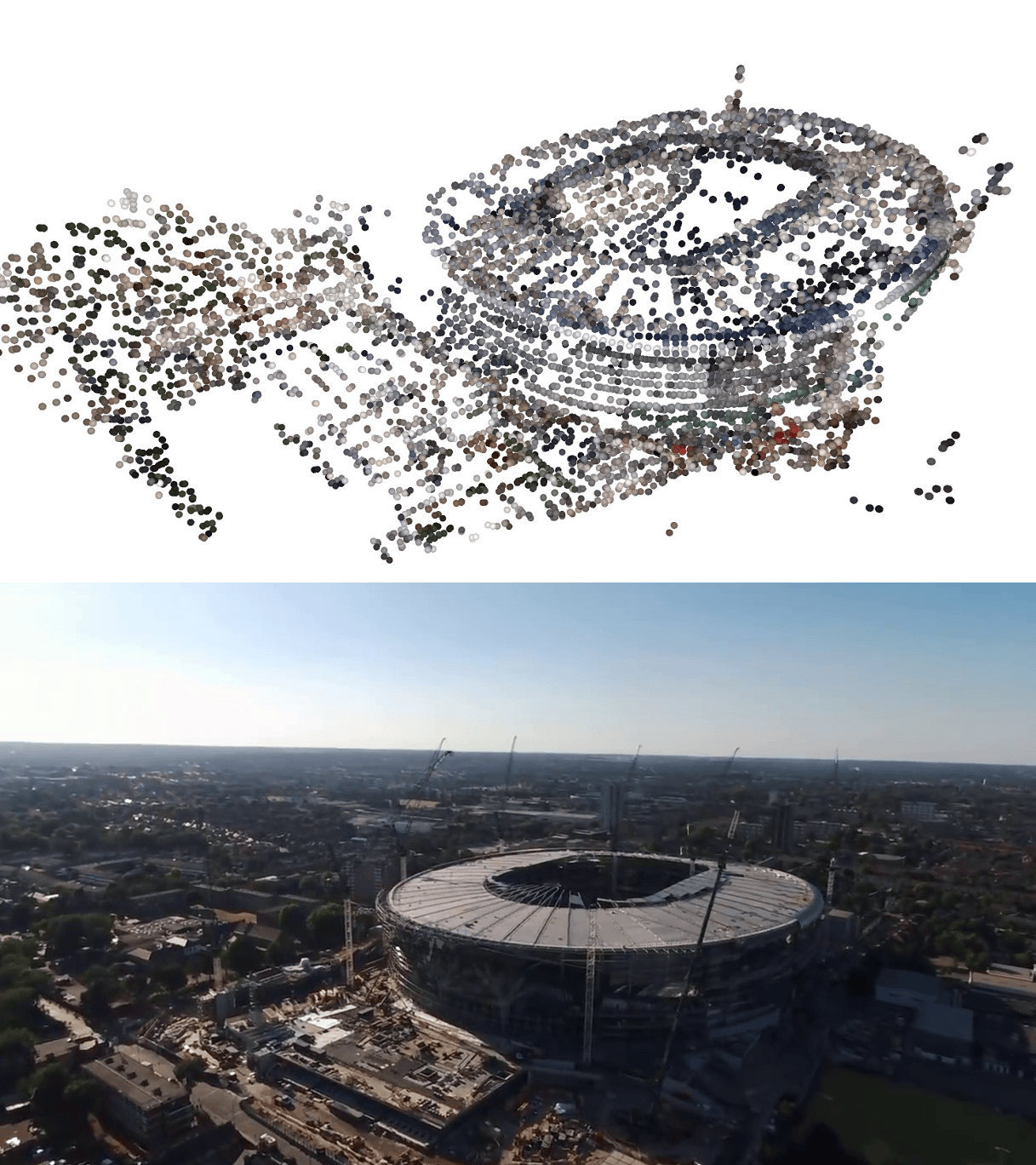 Bundle Adjustment in the Eager Mode.IEEE Transactions on Robotics (T-RO), 2026.
-
 iMatching: Imperative Correspondence Learning.European Conference on Computer Vision (ECCV), pp. 183–200, 2024.
-
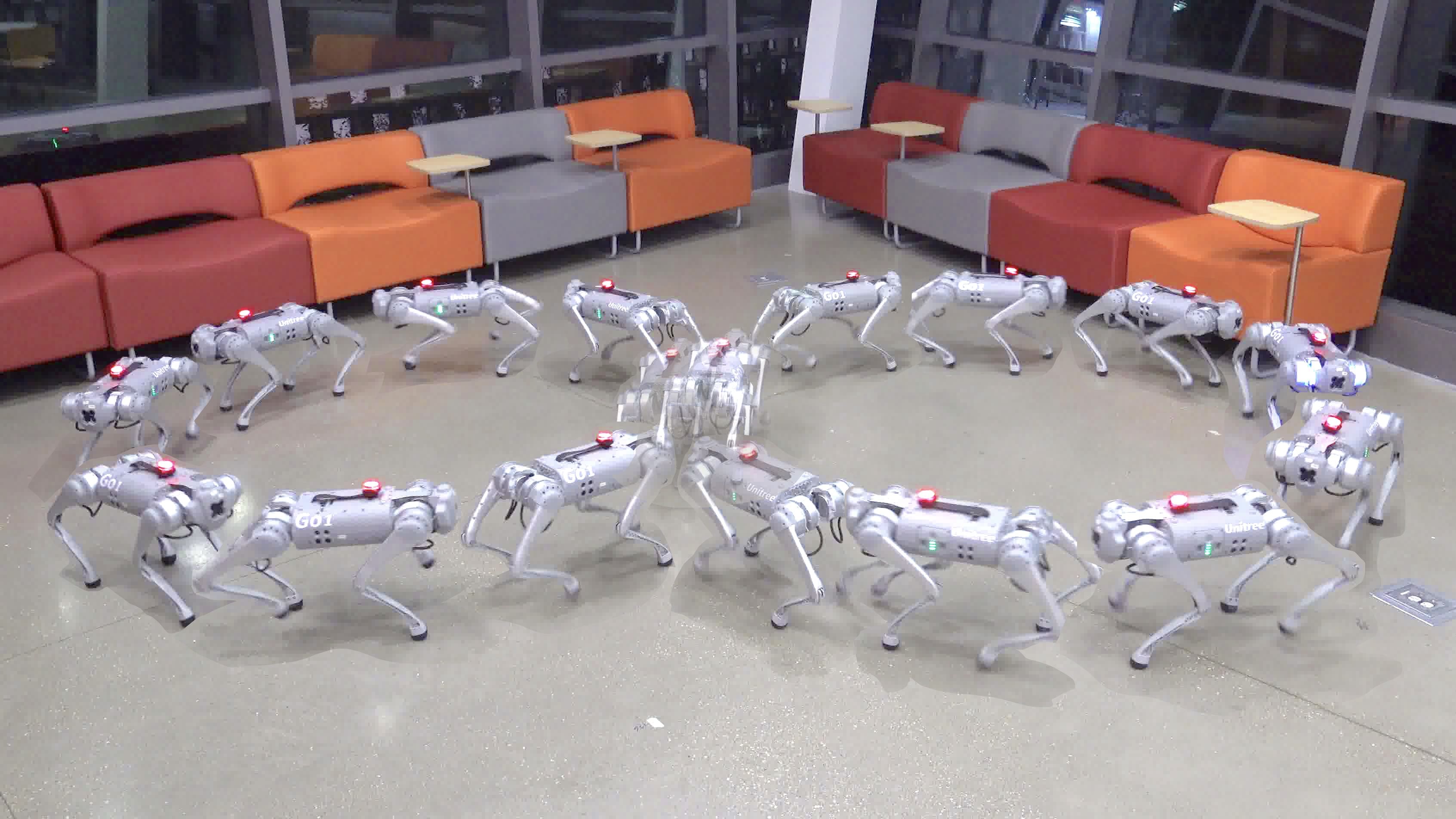 PyPose v0.6: The Imperative Programming Interface for Robotics.IEEE/RSJ International Conference on Intelligent Robots and Systems (IROS) Workshop, 2023.
-
InstantSfM: Towards GPU-Native SfM for the Deep Learning Era.IEEE/RSJ International Conference on Intelligent Robots and Systems (IROS), 2026.Corresponding author: Zitong Zhan
Collaborative Publications
-
-
-
Fast Task Planning with Neuro-Symbolic Relaxation.IEEE Robotics and Automation Letters (RA-L), vol. 11, no. 3, pp. 3684–3691, 2026.
-
Neuro-Symbolic Learning for Long-Horizon Task Planning Under Complex Logical Constraints.arXiv preprint arXiv:2606.06877, 2026.
-
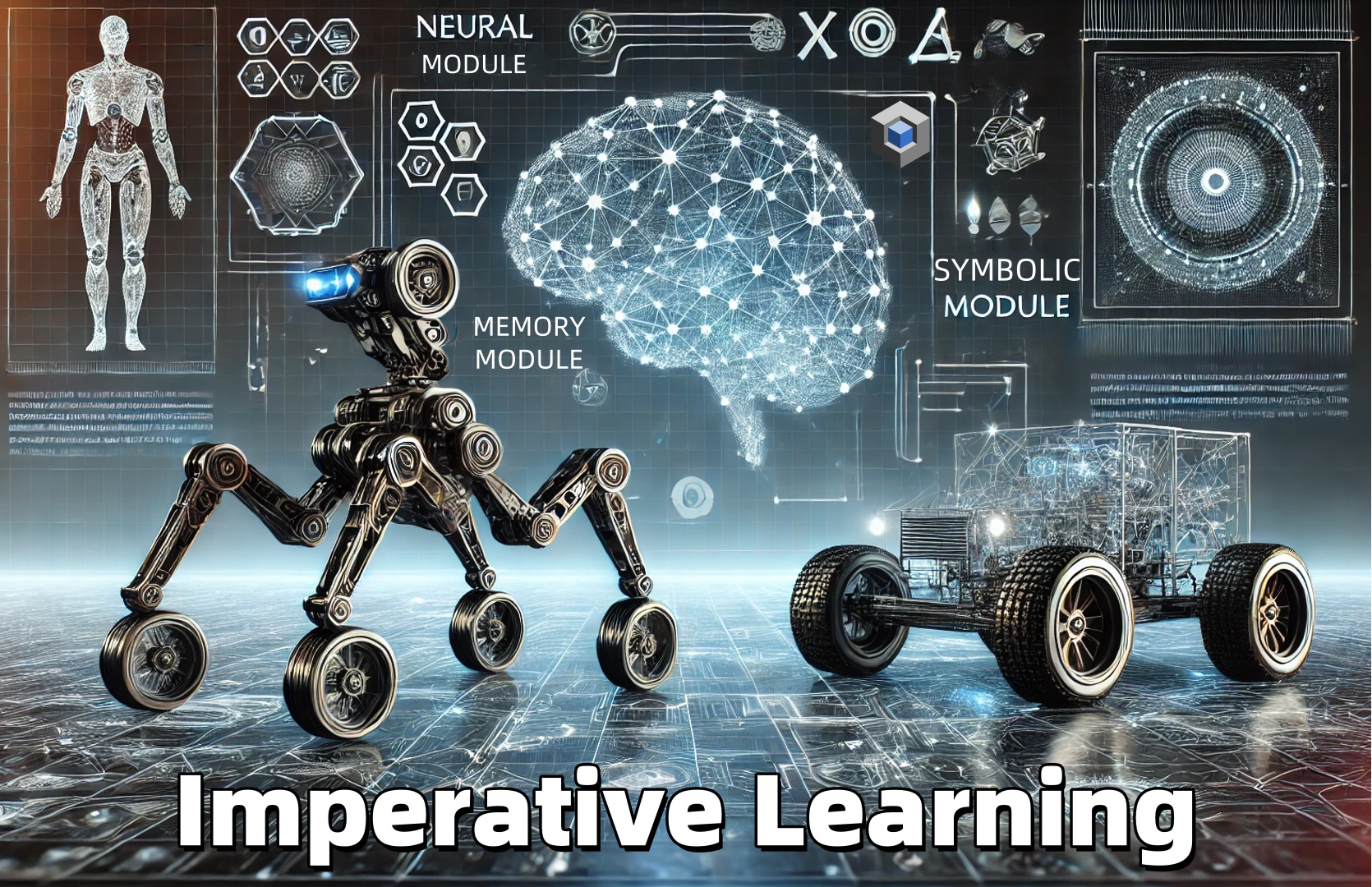 Imperative Learning: A Self-supervised Neuro-Symbolic Learning Framework for Robot Autonomy.International Journal of Robotics Research (IJRR), 2025.
Open Source Contributions
PyTorch
- PR #129856: Added a CUDA sparse linear system solver to PyTorch’s
linalglibrary, achieving a 20–30% speedup over previous implementations.
PyPose
- PR #378: Added support for Bundle Adjustment in the Eager Mode.
- PR #184: Implemented batched EPnP (Efficient Perspective-n-Point) as a
torch.nn.Module. - PR #216: Added batched ICP (Iterative Closest Point).
- PR #284 and PR #309: Enabled LieTensor operations under
func.vmapwhile preserving the LieTensor type. - PR #312: Added a Conjugate Gradient solver for sparse linear systems.
- PR #317: Implemented sparse matrix multiplication between BSR and BSC formats.
- PR #320: Fixed
Inv()and other LieTensor operations when used withpp.func.jacrev.